
Anishinaabemod
Case study / UX
Timeline
April - June (2 months)
Role
UX Designer
UX Researcher
Tools
Figma
A concept prototype exploring how digital spaces can support Indigenous language revitalization, relational learning, and cultural connection for urban Indigenous youth.
Project Overview
The project began with research into the barriers Indigenous youth face when accessing language learning opportunities, particularly within urban communities where culturally relevant resources may be limited or inaccessible.
Research findings highlighted recurring concerns surrounding outdated educational tools, lack of engaging content, low confidence in learning environments, and the absence of culturally grounded digital experiences.The app was designed for Indigenous youth and learners who may not have consistent access to land-based learning, fluent speakers, or community-based language programs.
Challenges
For many learners, particularly youth in urban or displaced contexts, language learning can feel:
☒ distant
☒ inaccessible
☒ disconnected from lived experience
How might we design a digital platform that supports Anishinaabemowin learning for urban Indigenous youth experiencing cultural disconnection?
User Research
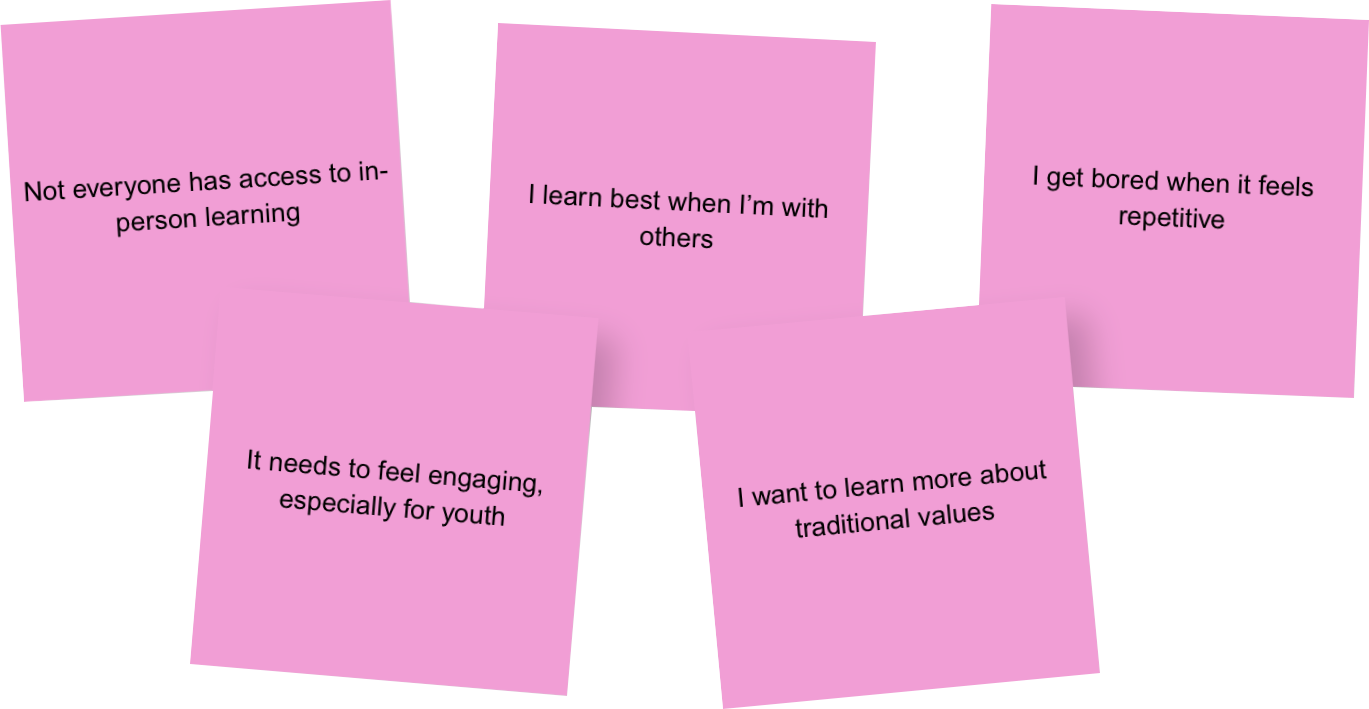
To better understand user needs, I conducted interviews with Indigenous individuals living in both urban and on-reserve communities. Through these conversations, I learned that access to language and cultural learning varies significantly depending on location, often shaping how individuals connect with their culture, community, and identity.
Rather than functioning solely as a language-learning application, the project became an exploration of how digital spaces can foster connection, relational learning, and shared cultural experiences.
Defining the User
Ziibiwan ⋅ 15-year-old high school student living in the city
The project’s primary persona, Ziibiwan, is a student with a strong interest in learning Indigenous languages and syllabics, she struggles to find reliable applications that genuinely engage her especially in an urban setting. She often finds herself deleting language-learning apps because many feel outdated, isolating, and lacking in content that appeals to Indigenous youth.
As a result, she begins to lose confidence in her learning journey, especially when comparing herself to peers attending local Anishinaabemowin immersion camps who appear further ahead in their fluency.
How might we design a digital experience that supports language revitalization while centering Indigenous knowledge systems?
Language learning is most meaningful when it is relational and rooted in community.
Key Insights
Access to language learning varies by location
Urban learners face barriers to community and land-based learning
Language is understood as relational and lived, not just instructional
There is a need for culturally relevant, community-based digital tools
Rather than replicating conventional language-learning applications, the project focused on relational learning, community interaction, and creating a digital environment that reflects Indigenous approaches to knowledge-sharing.
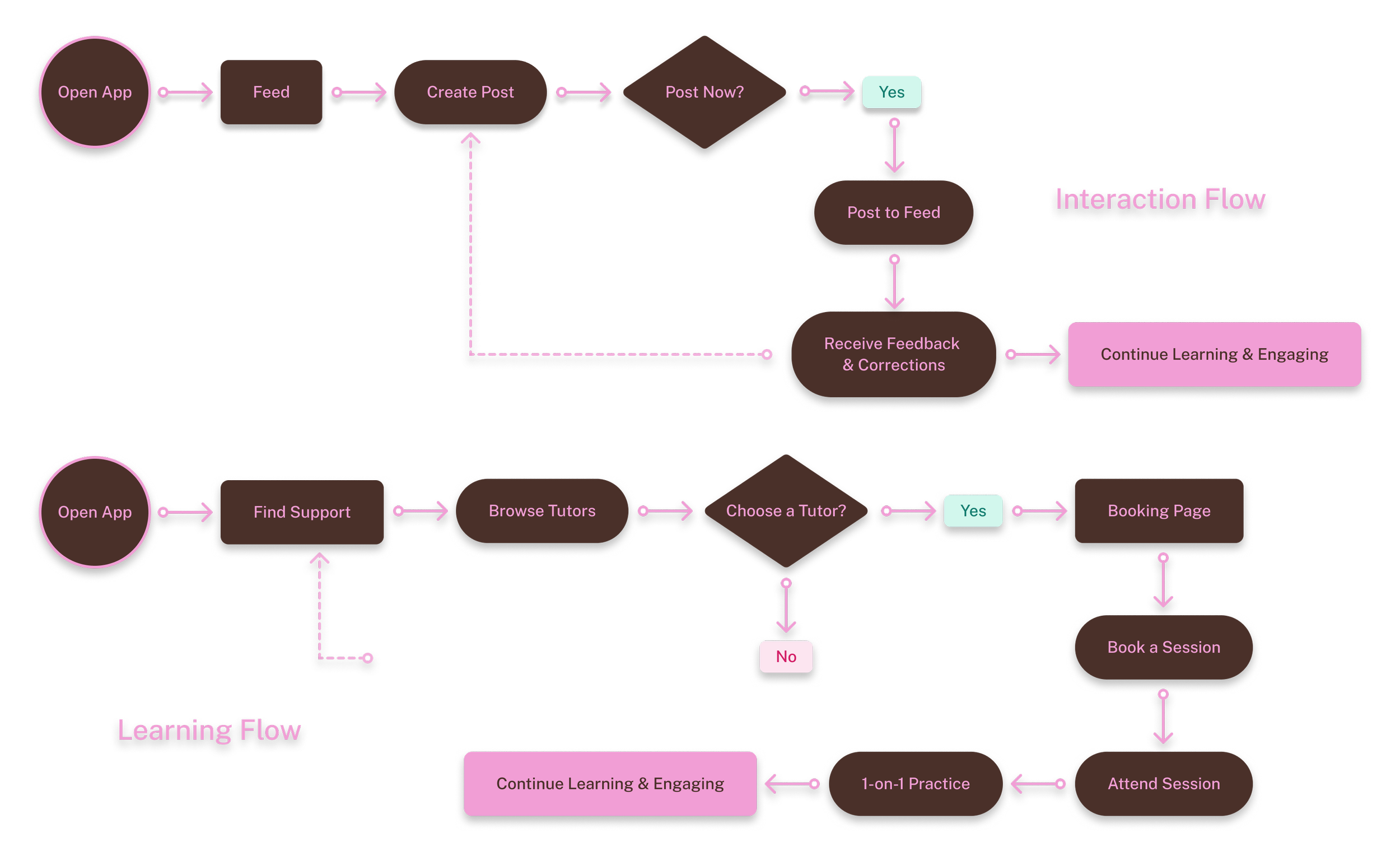
Anishinaabemod explored two interconnected solutions:
a culturally grounded language-learning application featuring interactive educational tools
a community-based social learning space where fluent speakers and learners could connect, teach, and support one another
How It Works
Digital Gathering Spaces
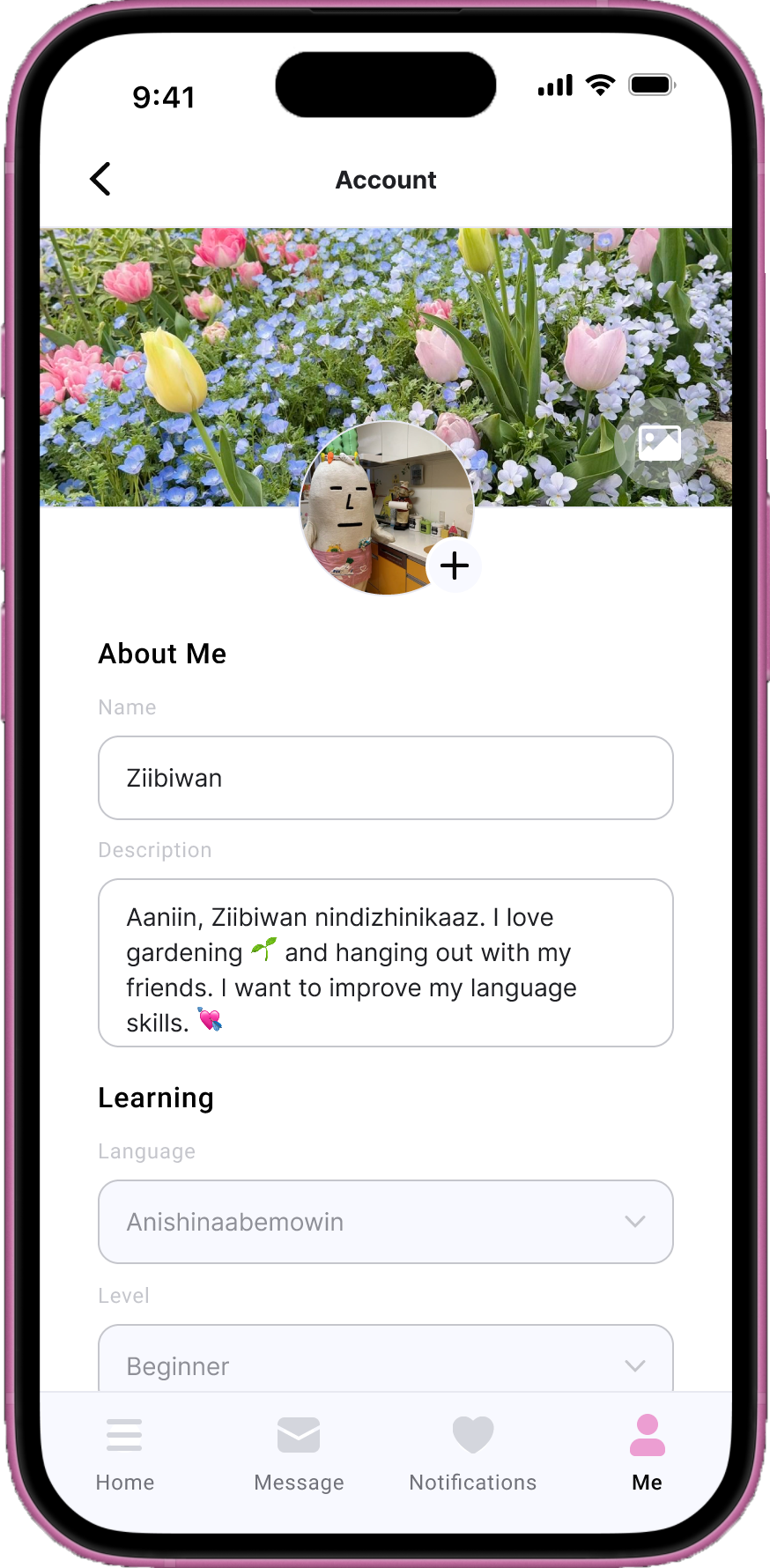
Users can create profiles that reflect who they are, their learning journey, and their connection to language and community. This encourages visibility, self-expression, and a stronger sense of belonging within a shared digital space.
The experience was designed to reinforce identity through language while supporting culturally grounded and community-based learning.
User Profiles & Identity
Rather than relying solely on traditional lessons or memorization exercises, Anishinaabemod encourages collaborative learning through conversation, corrections, storytelling, and peer interaction.
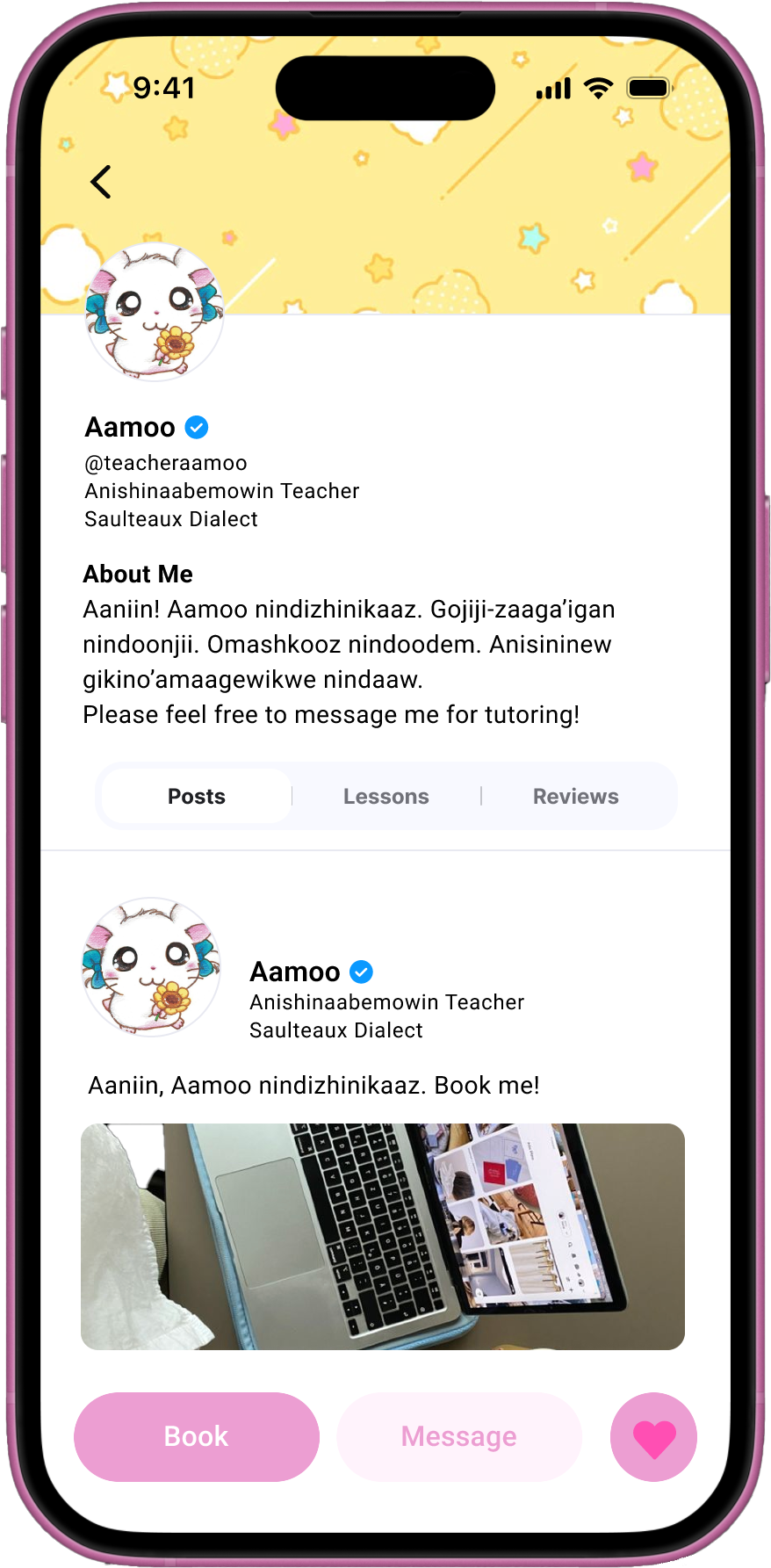
Fluent speakers can support learners through translations, feedback, tutoring, and everyday communication in Anishinaabemowin.
Accessibility and Engagement
Many existing Indigenous language-learning platforms feel outdated, inaccessible, or disconnected from the realities of Indigenous youth today. Anishinaabemod was designed to feel visually engaging, welcoming, and easy to navigate while remaining rooted in cultural values and community care.
Features explored throughout the UX process included:
syllabics integration
voice and text support
sentence-building exercises
tutoring sessions
customizable profiles
community interaction tools
Designing this project deepened my understanding of how language learning extends far beyond instruction alone. Through research, I came to understand that language is lived through community, relationships, and shared experiences. Rather than approaching digital design simply as a functional tool, I began to see it as a space capable of fostering connection, cultural continuity, and belonging.
This project encouraged me to move away from standardized learning models and toward approaches that better reflect Indigenous ways of knowing and relational learning. More than anything, it reminded me that design is not only about usability, but also about responsibility.
Through this work, I continue to explore how design, technology, and Indigenous knowledge systems can intersect to create meaningful tools for future generations.